![AngloGold Ashanti [logo]](https://www.anglogoldashanti.com/wp-content/uploads/2021/05/logo.svg)

Artisanal and small-scale mining (ASM) continues to present one of the most complex social challenges facing the gold industry.
Across many of our host countries, ASM provides livelihoods for large numbers of people, often in the context of poverty, unemployment and limited economic alternatives. At the same time, unmanaged and illegal mining presents serious risks, to human life, to the environment, and to the stability of communities and industrial mining operations.
Considering that most activities in the ASM sector are informal and outside of legal frameworks, ASM remains a key material sustainability risk for AngloGold Ashanti with the loss of gold-bearing ore, environmental degradation, the use of dangerous chemicals and human rights violations against vulnerable groups being our primary concern.
Rising gold prices lead to increased global ASM activity, which amplifies existing challenges and reinforces the need for enhanced governance, strengthened engagement, and the promotion of more responsible and sustainable mining practices for ASM operations.
Advocating a co-ordinated, multi-stakeholder approach, AngloGold Ashanti is committed to advancing the formalisation and professionalisation of ASM through the establishment of a co-existence framework that recognises different country-by-country dynamics and regulatory provisions. The institutionalisation of ASM is vital to establishing end-to-end traceability of gold and to ensure a transparent, conflict-free supply chain aligned with international standards.
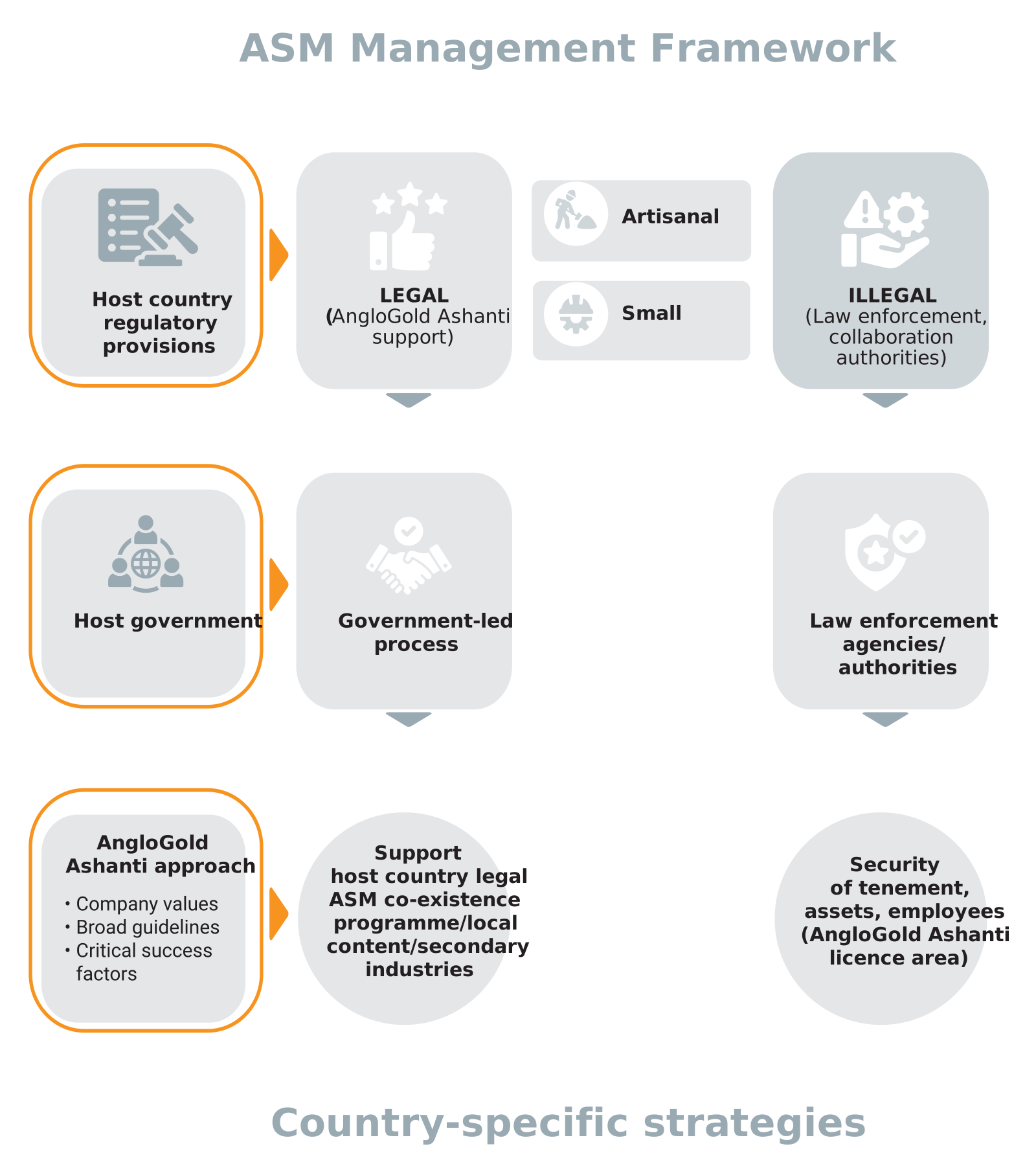
Our approach calls for:
- Contributions to the formalisation and regulation of legal ASM, and its integration into broader social and economic activities
- Policy frameworks and practices that foster a viable and sustainable legal ASM sector
- Collaboration with the International Council on Mining and Metals and the World Gold Council to enhance industry practices in dealing with ASM
- Geological research to identify suitable zones for legal ASM, a consideration that would apply within broader land access discussions
- Development of programmes to promote the transfer of knowledge, skills and technologies to the legal ASM sector, with a particular focus on safety and environmental practices
- Identification of potentially viable legal ASM operations for targeted support and the aim of enhancing access to markets, better mining technology, and mercury-free processing methods
- Development and strengthening of legal ASM associations which provide an interface for meaningful engagement with the sector
Policies and standards
Performance in 2025
9
Number of operations/sites adjacent to ASM
9
Number of livelihood projects
2
Number of countries across footprint with formalised ASM
9
Number of ASM engagements
3
Number of co-operation agreements in place with ASM
For further information, refer to the 2025 Sustainability report: Addressing artisanal and small-scale mining
-

Exploring a Collaborative Security Model at Geita Gold Mine
Learn more: Exploring a Collaborative Security Model at Geita Gold Mine -

Geita mine builds a community policing team
Learn more: Geita mine builds a community policing team -

Gramalote partners with ASM
Learn more: Gramalote partners with ASM